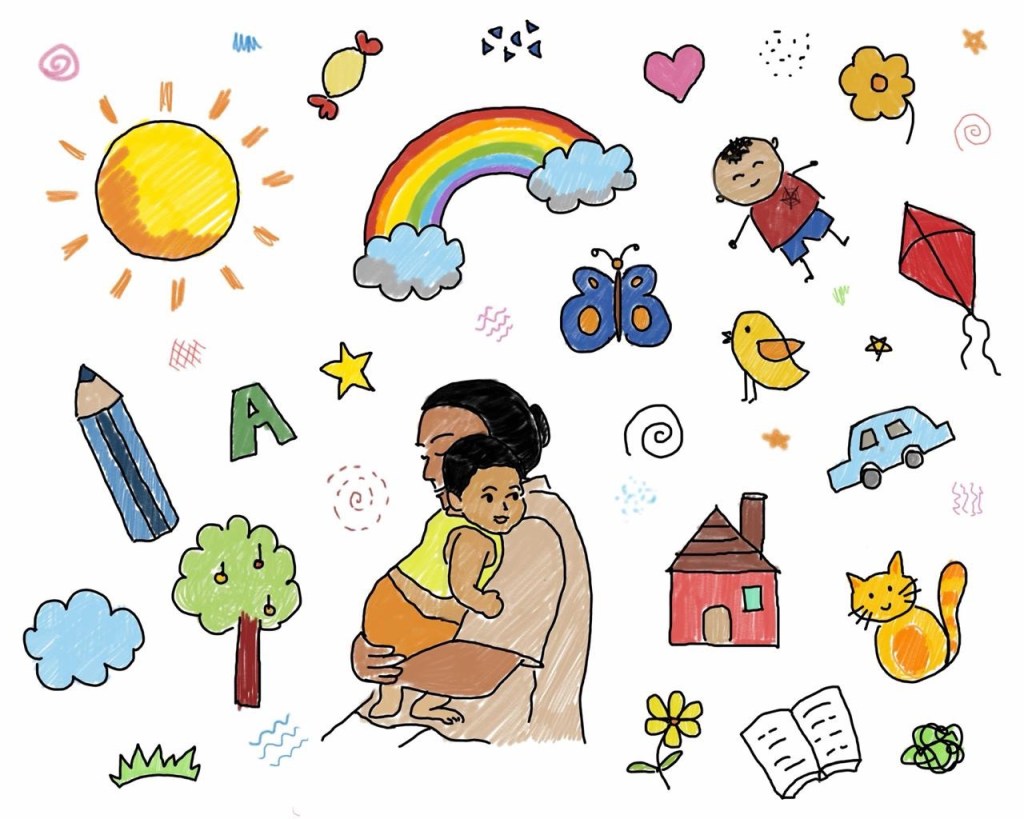
I love the little moans you do That we ascribe various meanings to A little feed and light shines on your face At 3 am it is my life’s saving grace I love it when you sleep in my arms It seems evidence of God’s alms Your chest rises and falls with mine Like life’s meaning that I was to find You smell like milk, you smile like your dad I become your bed, bathroom and home base And love you in countless ways. I’m supposed to be the one To give you warmth, your mom, your safe space But how is it, I wonder, that you’re my sun?
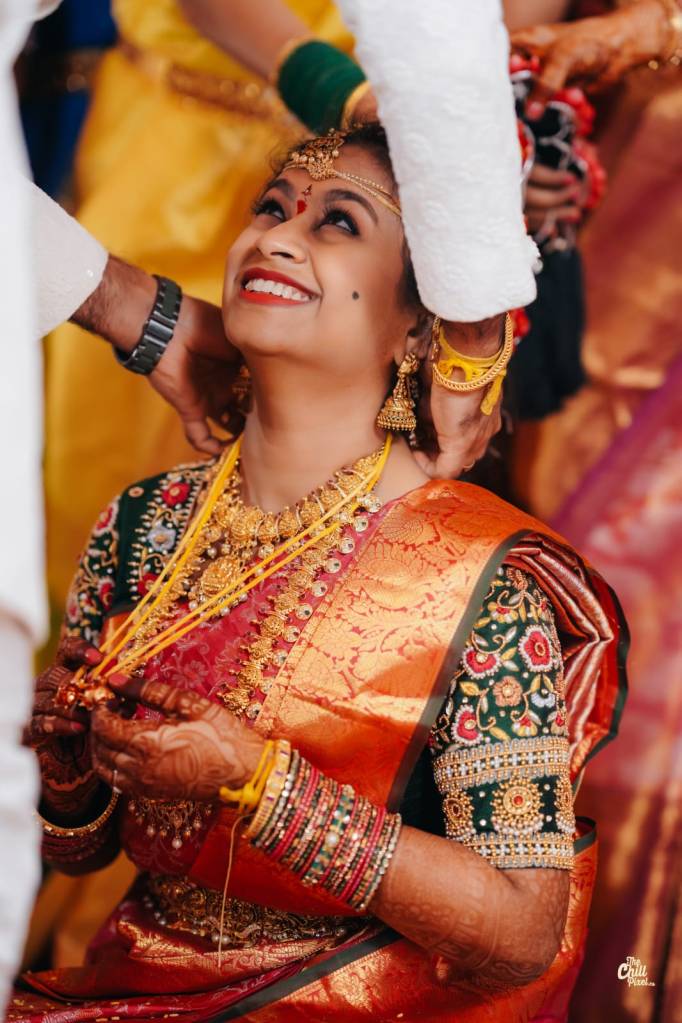
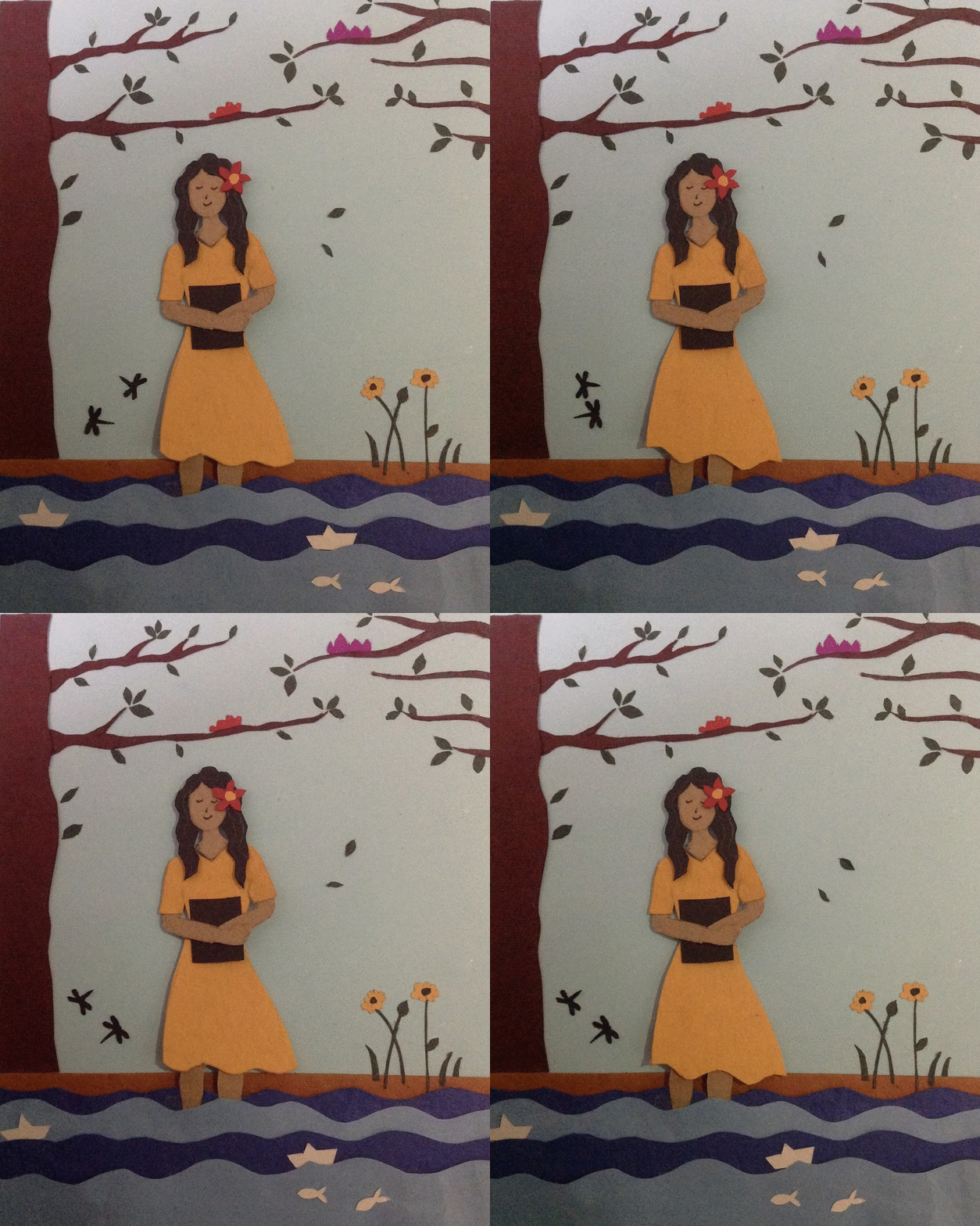
I haven’t written in a while and it will show in the clumpy way this caption will unfold. As any one of my friends will tell you, I’ve been talking obsessively about my wedding for the past year. And that wedding happened on 17-12-2022. I wanted a wedding with a dozen people that I loved at a temple. Thank God I did not get what I wanted. I did not know so many of the people that came and I was upset that I did not. In the moment, I wondered what they were even doing there. But then I saw my grandparents reunite with their friends, my dad with his classmates, colleagues and everyone else that must have made him happy at some point. My mother must have met her colleagues beyond the workplace for the first time at my wedding. It reminded me once again that this event was for the most part theirs, but this time I remembered it with acceptance and contentment. It was their event, their daughter’s wedding. I’m my parents’ daughter; this I remember everyday, but I’m also my grandparents’ daughter, both sets, I’m my Chinna babai’s daughter, my Srikanth babai’s daughter, my Diwakar mama’s daughter and my Pavan mama’s daughter. Lot of posts come out on the disadvantages of being the eldest daughter, the sense of responsibility and the early onset anxiety it causes in adulthood. But being the first daughter in my family gave me the unique chance to witness how all of my elders grew up with me and really just how much I mean to them. I met my Chinna babai after years, but you’d not have noticed it in our greetings. He’s still the mentor that showed me a path after intermediate and the family I counted most on when I was lonely in London. I’ve not seen Siri graduate and grow up, but when she was here, she was the same sister I knew as a baby and played with. I could see myself in Lalli when she was studying and tired during so many functions. Manu was bomb on the Sangeet stage with very little practice. I hope that because of this wedding my three sisters and my shy brother Sai, think of me as an approachable sister when they need anything. My Srikanth babai and his Hawai shorts jokes leading up to the wedding made light of the extreme tension building up at our house. I had been afraid of crying in front of everyone the day I was made pellikuturu and I was just praying that I do it in my room. Out come them one after the other in front of everyone at the dining table and both my pinnis made me feel completely at home, and completely okay. I wish I could put into words how loved that made me feel but I’m really not that talented, and I wonder if even English is capable of that. Jiteen breaking a sweat and dancing with my husband’s cousins was so wholesome and unexpected. I wish I spent more time with my brother and Madhu during this process. What little time they had they squeezed me into it. My brother was busy with his own sister’s wedding and if it took a toll on him and made him hate me, he did not let it show. He knows he means the whole world to me but he doesn’t know how overwhelmingly grateful I am that he did not cry even once in front of me, even when our parents were breaking down, he held it together and thereby held me together. I wish the world was half as considerate. I’m grateful that Madhu was my driver for both the engagement and the wedding. It somehow seemed fitting that on my wedding day I come to the venue in my best friend’s car and left in my husband’s. I hope that that doesnt mean she is giving me away. I would not survive that. I felt an acute loss of identity in and around the wedding days. That entire week I did not know who I was, it was not my aesthetic, it was not my way of doing things, I did not know what kind of bride I wanted to be, I was doing some things that I did not know about and some that I did not agree with, but when I look at this picture I feel that that’s all okay. All of that can be figured out later with the help of my beautiful husband who I’ve finally come to. I may not have known the person I was giving to Harsha at the time, but I know that my family was giving a beloved daughter, sister and bestfriend and I hope that they’re proud of that.
Poetry comes out of lonely people; Lonely people write poetry. Lonely people sit and feel lonely, Rummage through their scattered belongings, Scroll through their meagre contacts, Fidget around with a pen and a tiny book. And write poetry.
Lonely people write poetry that fits in the palms of their hands, Tiny, the beast remains contained, Unknown, a small opponent, a defeatable enemy. The teensy poem sits like a feather on their already heavy hearts And makes not a single sound. Lonely people search and search again. Among playlists, among movies, amongst the written word. Unpacified, they sit and write poetry, through freshly dried eyes, surrounded by friends, books, things and wonder Why one lonely person does not recognise another.
I spent the last few weeks trying to come up with something to write about for the month of June.
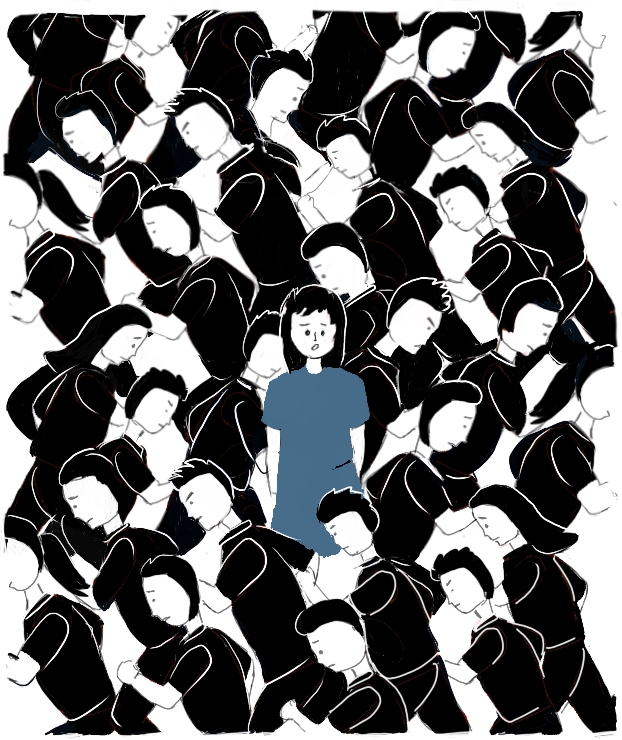
Imagine a carnival, but the lights are blinding, you are in a huge, huge crowd, sand would not land on the earth, there is no space, your arms may be touching, you are head to head, but the lights are so blinding, the sounds so all engulfing, so loud, you cannot even see the person beside you. You have no idea that you actually belong in a crowd. Do you want to get somewhere? You cannot. Do you want to choose one activity? Do you want to pledge your loyalty to one thing? Do you just want to breathe? You cannot.
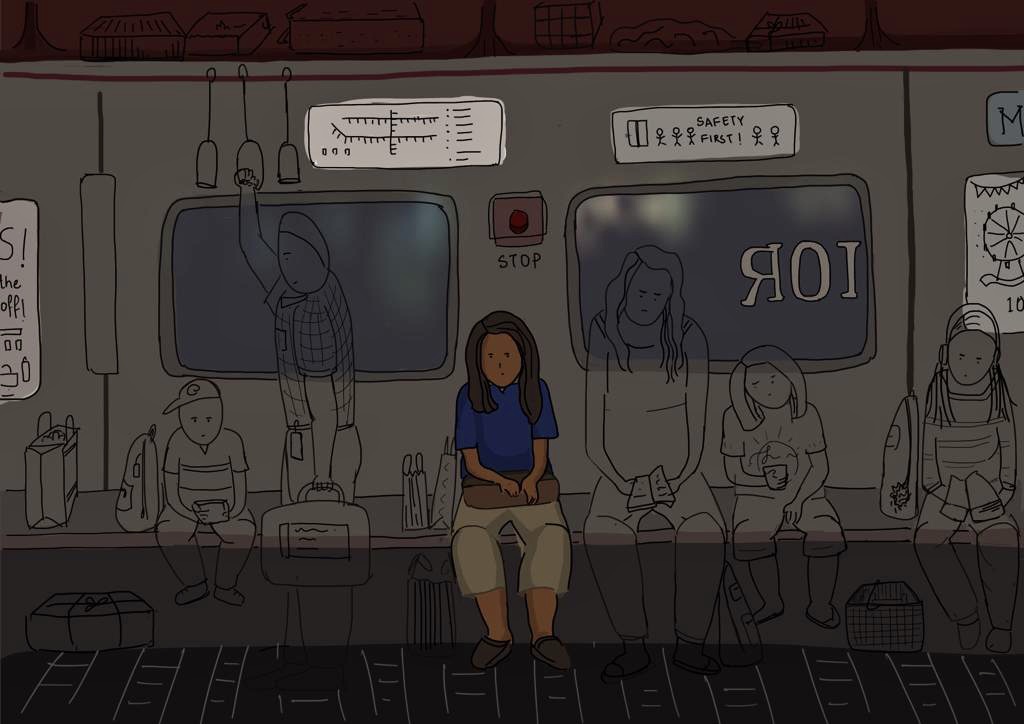
From your lonely kitchen table, everything probably appears far away, everything is singular and separate.
Racism, police brutality and violence, Dalit deaths, a cyclone, death of a few beloved animals, a doctor running for his life in his own ICU, and now the death of Sushant Singh Rajput, an extremely learned and talented actor, his death, by suicide. Did I mention the pandemic? That is probably the arena in which this dystopic carnival is taking place.
Do you want to choose one problem to assess? Do you want this article to mean one thing? Do you want it to make sense of it?
It isn’t possible. I set out thinking, there must be one magical solution, such as kindness or patience or maybe even Godliness, that can somehow encompass all of these things, that can somehow erase their specific histories and boil it down to one problem, a possible lack of empathy, that can be cured by pouring or shoving more of it down people’s throats.
It isn’t possible. I am tired as hell.
Before we feel kindness, or patience, before we set out to do anything else, we have to be angry. Recognize that anger is essential, it is a life force, more often than not, when felt for someone else, it is the diagnostic sign of empathy. We have to be angry not just for ourselves, but for the people around us, if you know of any unfairness anywhere at all, take a second to tune out everything that is distracting you from it, then make an attempt to let the news really sink in, even if it feels scary or discomfiting, even if you can do nothing tangible about it, even if you think feelings are useless, feel anger on the behalf of your fellow creature.
Even if you cannot see it, you belong in a crowd.
Anyway. Did you do that?
Now,
Is there anything you can do about it? Can you sign a petition? Can you donate? Can you be vocal about it? Can you spread the word? Can you join protesters? Are you in a position of power? Can you affect change?
Yes, great, do it, pat yourself on the back.
No? It is still fine. You must have a hundred other things on your plate, maybe you have compassion fatigue, maybe you are sick, tired, numb, or focusing on simply keeping a roof above your head and food on your plate, maybe you are not okay, maybe just maybe, you are the one that needs a hand to be extended for help.
In that case, thank you for continuing to exist, thank you for feeling stuff for someone else. I hope you find someone to reach out to.
There is not much connecting all the things that happened except the fact that they all are happening right now, in the most terrible year anyone has seen for the longest time. It is cruel as all hell, all of them are tragedies in their own right, all of them deserve our attention. They are all in different stalls and we have to get to them somehow. We have to navigate through the confusion and the crowd to be able to do that. For me, the only way to do that seems to be to accommodate your eyes to first notice the people immediately beside you, to not be blinded by the larger picture for just one moment, to clear space and time, for targeted action. If the person beside you is your brother in a joined cause, hug him and proceed together. If he is fighting for a different cause, hug him and point him towards the right direction. If he cannot do anything, if he is looking sad or lost, hug him the longest and say nothing.
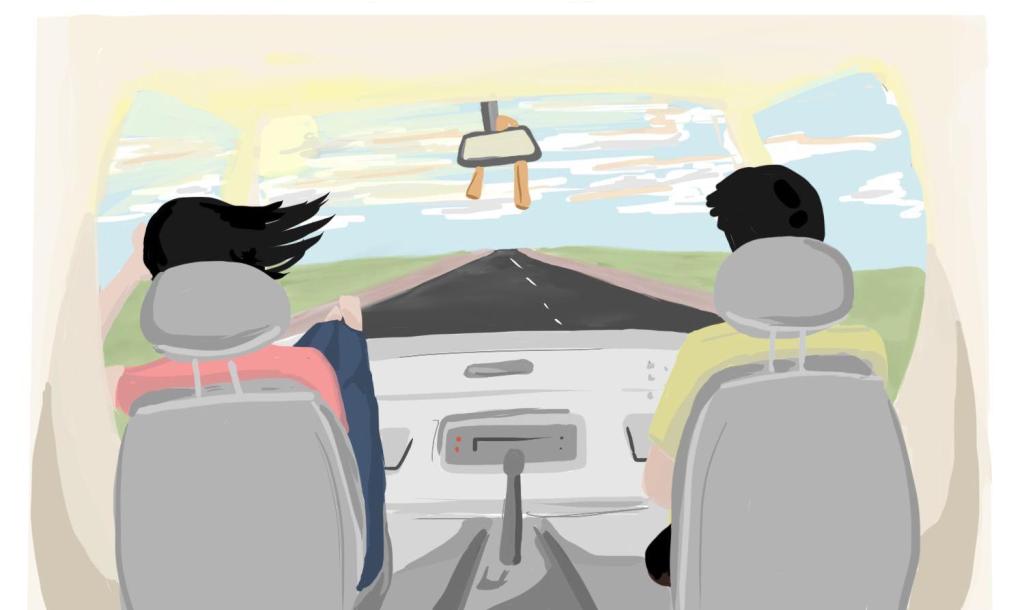
You took me out, we took
Our Grey box and
Drove
You took me out, rescued me
In our little grey box
In our grey box, we sat and drove
Away.

You drove for a while,
Past greenness, past cement
Past clouds of dust and bumpy roads
I played around beside,
I played some song.

Let’s drive further, I said,
Let us drive some more,
Let your heart hold fast you hummed
In that little grey box.

In the grey box, we sat,
And rescued each other,
I remember well,
For we had a flat tyre.

Risk it? I remember asking,
Risk it.

You took me out, rescued me,
From a dystopia into a vast blue expanse
With some dust, some traffic, a bumpy road
And a beautiful day
We ran away

You took me out, I was still worried,
Let me do this for you,
Let me do this while I can, you said
I remember and I remember well,
You had a quiver.
And I played the song louder.

The road gradually cleared
You drove me out for a while,
Then Let me in.
And I drove for awhile

Pancakes? I remember asking.
Pancakes.

What is the story? You asked.
The one you are thinking of in your head?
Just the story of you and I, I say
A brother that has a sister’s back,
A brother that she cannot rescue,
a brother that really needs it too.

It is funny, I think, how
three years distance,
you make nil
I wonder, sometimes, now,
will it be fine?
if we somehow captured
An year in a day;
this one day,
when you rescued me
And together we got some chai.
Will this day sustain us,
I wonder, for my year in London.
This one day with
Its almonds and its leaves of
Darjeeling tea,
Some batter and some spoons of
Nutella sweet.

The Clock was set though
and the time a half an hour
15 later and already the phone rings.

Flat tyre, mom.
A lot of traffic, mom.
I know mom,
I leave in 2 hours.

There was a truck in front of us,
Full of onions
Stuck in a difficult turn
But we had just half an hour and
We needed to return.

Even more traffic, mom.
So much traffic, dad.
Yes I know she is leaving.
In just 2 hours.
I like English and I cannot lie. I am Indian and I cannot lie. In fact, I am writing this at a kitchen table in London, studying English at a university, wearing a patiala pant with Dhoom Tana blasting in my ears. I take breaks to watch Yeh Rishtey Hain Pyaar Ke and that is probably the only part that I may not be proud of all the time. I speak in Telugu with my parents, in Hindi with my friends and in English every other time. The ironies are never lost on me. My thoughts come in English as well.
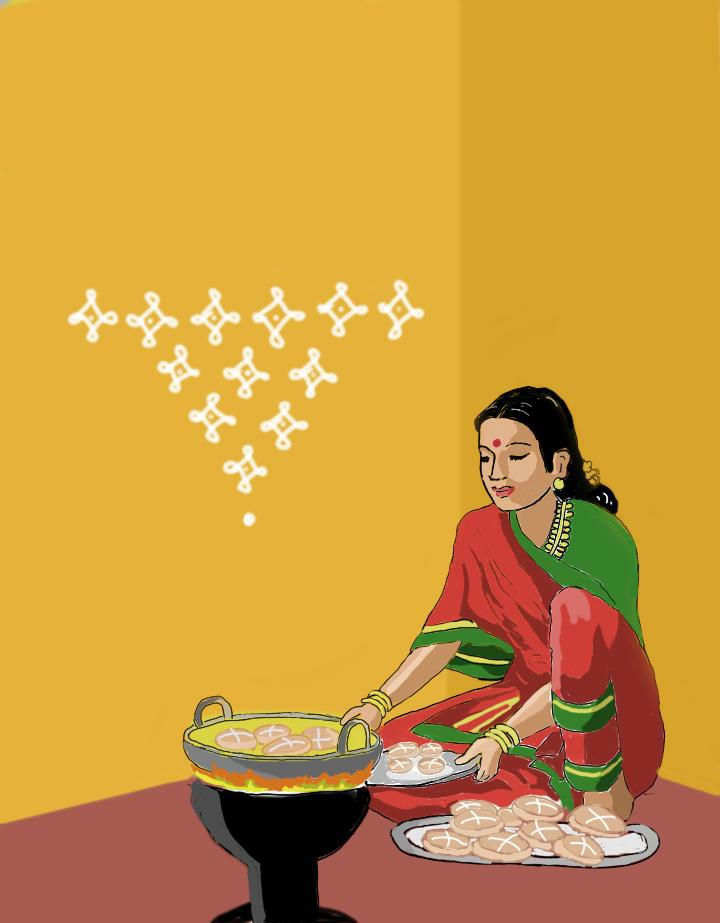
If therapy and countless books have taught me anything, it is that all meaning, all coherence comes from the past. So I guess it is only fair that I look for the solution to my multiple identities and their corresponding ironies in mine. I could never learn hot cross buns. I did not know what a penny was. I was around 2 or 3 so I did not even know what a rupee was but that wasn’t that big of a deal. I could learn the longer version of twinkle twinkle little star, Old McDonald was my brother’s favorite and wee willie winkie and ring-a ringa-roses were childhood plays. I did not know the words properly to the last one either, they were a set of abstract sounds at the end of which we fell.
Cut to 10 years later and I am learning history in an English medium class. For years, our history textbooks covered in detail India’s freedom struggle. Its colonial history was given the maximum weightage in all exams so we knew that it was important. I did not even study about the world wars until a few years ago and recognised, with some shock, the impact they have had on the world. It did not make sense to me initially because they last- ed (together) for around 10 years, with some 27 years in between, give or take. Colonies have been around for a few centuries.
Even if those numbers did not add up, I thought my personal experience would. India got independence in 1947, I was reading its history 60 years later, for over a decade. But colonialism was already etched in my infant memory. And since then my colonial legacy had new things to teach me apart from innocent nursery rhymes that I could not relate to. My behaviour was modelled after Enid Blyton even as my grandmother fought to keep Panchatantra alive through bed time stories. Fair and Lovely was brought in hordes and used by the entire family because who would give me importance if I was brown? In school, we wore blazers in scorching heat. Speaking fluently in English had come naturally to me. In school, you were punished if you spoke in your native language. As long as we were in the premises we had to speak in English. It is a whole different thing that I was the only one who took it seriously, even though I was aware that it was an unfair rule.
Examples do not stop there. Time would run out, space would run out but the examples of Indian complicity in propagating white superiority decades after independence would never. But the story is larger than who is responsible for this. The story is bigger than a blame game because contrary to my initial belief, colonialism was never a simple case of bully and victim. This lesson I would only learn in London and who better at teaching me than my old and elusive friends; the hot cross buns.
I walked into a cafe for a mocha and some quiet to read Mulk Raj Anand’s Untouchable when I see, for the first time, puffy little round buns with two white lines intersecting each other sitting innocently atop a creamish white plate and staring at the roof made by an enormous transparent lid. As I waited for my coffee I thought to myself, “ahhhh now I see.”
I did not just mean the rhyme though. I could see and understand, only in part, why wars could just sustain themselves for a few years whereas imperialism went on successfully for centuries, across the globe. You see (and I really hope you do), war is a rather acute manifestation of inter-national dissent. Colonialism was the chronic, systematic and methodical suppression of communities through politics, economy and culture. Culture is the key to maintain continued dominance. Cultural dominance, I would go so far as to say (backed by my example of the endurance of hot cross buns in colonial memory), is a necessary, prerequisite condition for imperialism’s success.
People would say that globalisation, which happened a mere 30 years after independence, would have brought about cultural exchange anyway. But I would urge those people to not only understand the difference between exchange and oppression but also that globalisation is intimately entangled with the imperial empire. Especially the speed with which it happened and the speed with which India took up the challenge to participate in it, is dizzying to say the least. We never even gave ourselves the chance to heal and to understand that while our culture had some problems, we were always capable of changing it for ourselves and for discriminating those aspects which were beautiful, those which were harmless and those which had to go.
Without such an understanding and without confidence in our own heterogeneous identities, any choice we make will be tainted by a colonial legacy which will implicitly propagate a see-saw like opposition in which the system is rigged to keep one side up always. On the other hand, if we do recognize the problem and strive to stop enforcing one culture on another, we will be able to exchange buns for biryanis on equal but different terms.
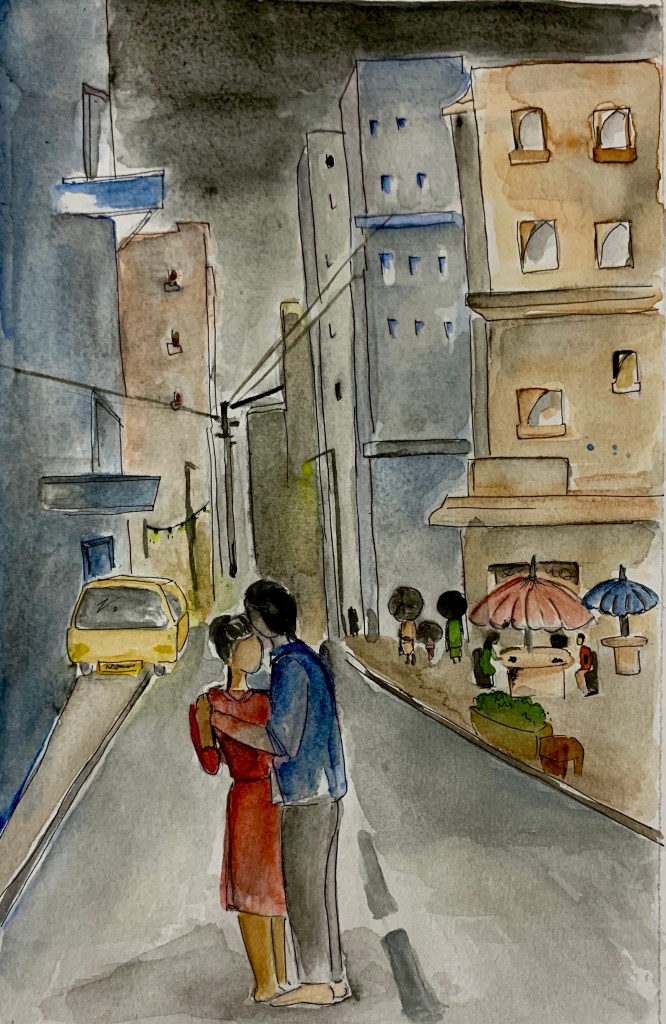
You aren’t that private song We used to play Its been far too long For that melody to stay
You aren’t that song We once swayed to Its been far too far For our dance to continue
You aren’t that song Anymore, that could fade into the traffic; Blend into Bangalore’s noise Like some dark magic
Our song only comes and goes It goes and comes. Confused it knows no beginning, Nor does it will to end. Kept alive by a shoulder, by A match won and one lost, It sings from Under the sheets and Over the moon; our song which not really a song is Sings and stings Stings and sings As Life’s disguise and Love’s ransom It grows in us and will rise again In the days to come.
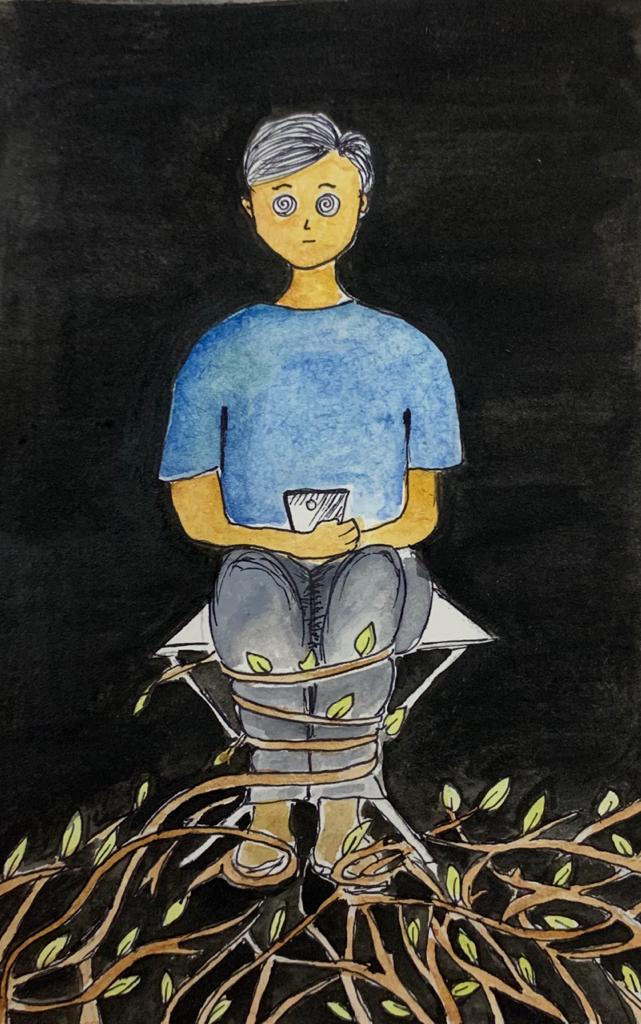
The scenes in my house from early afternoon on, on any given day are almost always the same. There being only two variants. The house is still, not just silent, still. The only few murmurs of sound are from the television set upstairs. If you sit at the head of the dining table on a lucky day you can hear a hint of the conversations of the house’s plants. Often saying the same things, in the same pattern, silent for a long time, followed by soft swishes and occasional surges of seemingly immense meanings and then falling absolutely still again. To the sceptic it is a scene orchestrated by that day’s wind. But to me it feels like the wind itself is dictated by the leaves’ whims. That they bend the weather to their will and masterfully disguise every secret they have to share as a mere reaction. In their vigorous noddings and wild sways I can almost swear to be seeing a rebellion taking place. They probably discuss the first line of attack as debated at the previous night’s meeting. How to conquer and when. And when the atmospheric storm spurs the huge ordinarily stagnant trees in front of my window into action, clever though the guise may be, I can hear their insults loud and clear. I can hear that they resolve to take everything back. That rebellion is coming as surely as Judgement day. And that they most surely will reclaim every inch of our land, with its buildings, pipes, waters and all. I know as well as I know my own body that the leaves of my books will take their rightful place on the trees. The water I use will go back to the rivers. The wind I harness will be used to churn volcanoes. Collectively, in a few years we will be rendered helpless spectators to the endgame they had been designing all along. And that day. That one day, will not be a war. It will be a massacre. How do I sleep with this knowledge at the back of my head you ask? You forgot the other variant I mentioned in the beginning. When the downstairs television is also on, blaring the noise of that day’s political debate, why you cannot even hear the voices in your head. How will you hear that of your plants? In the bliss of ignorance that technology offers, you could sleep away the rest of your life.
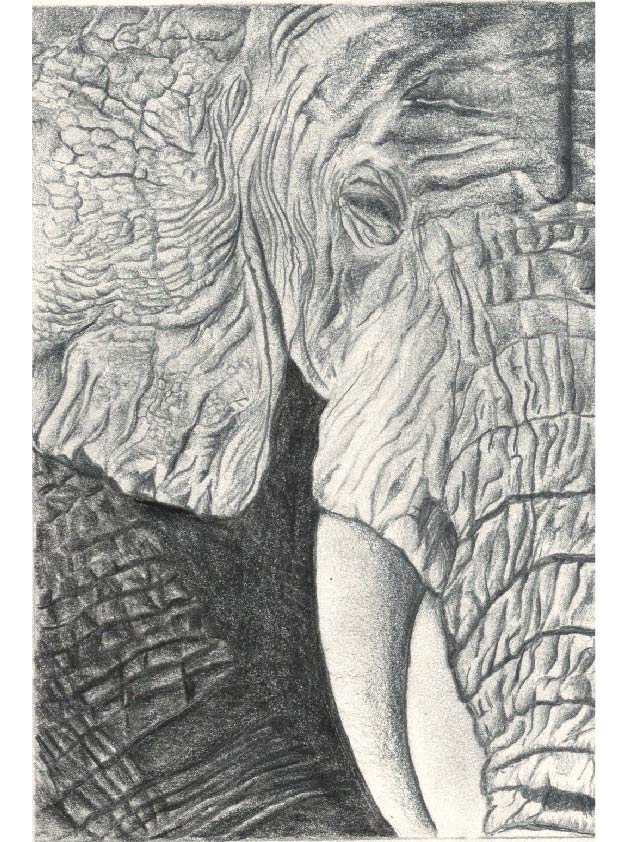
8/4/2019 10 pm Dear diary, I’m afraid there’re not many good things to tell you about today. We went to an elephant safari early morning, but the moment I looked at the poor animals the words of our wildlife safari guide in Kabini rang in my ears. “Elephants are fierce beasts. A herd of elephants can radiate power enough to scare a tiger even.” Elephants have been known to crush human settlements, obstruct safaris, damage Mahindra jeeps. I haven’t seen them like that. Those that I saw then in Kabini, Karnataka were just together and happy. We watched from a distance. We were quiet. It was that herd’s pool party. The elders were drenching the baby as it tried to wriggle away flapping its adorably large ears to the rhythm of that evening’s breeze. The whole thing was a “We Are The Tide” song. The contrast between those elephants etched in my happy memories and the ones I saw today felt like a tight slap across my face. My elephants today were sad, their spirit was meticulously crushed in a cruel discipline over a long time. Their eyes were drooped, their skin wrinkled and their forehead marked with the beatings from the long, metallic stick with a curve at the end. Elephants turned when man kicked him, changed directions according to commands given behind his ear. The seating was wrapped securely around his immense bodies, cushioned, for our comfort. Cushioned. I’ve never been more disgusted with myself. Their docility and obedience won not as a result of love or respect but of the fear of that stick cut through my mind worse than anything else in recent times. I wondered for a while if there was a way around this feeling of crushing guilt. Were these elephants old when they were captured? Are they treated like this only for a few hours everyday? Do these men not like that they do? Maybe they do it out of some unknown compulsion? Do they ever apologise to their elephants? Do they tell them thank you? Do they tell them, with a child-like simplicity when no one’s looking, “Dear Haathi, I love you so very much.” But no. There is no version of any narrative that can make any of this okay. This is exploitation, in its most raw form. And if we can look away from this, if we can ignore that small voice in our head that says that this is blasphemy and not a shed a tear for the bullying these animals have to bear, we don’t really have anything left to justify our existence. For what I saw today was not a compulsion, but an unmistakable choice. I saw a frenzy, an exaltation of man’s supposed superiority in the faces of those trainers. And an uncaring nonchalance in that of the customers. Nowhere was a hint, not even a hint of any kindness. What for is all this done? So that a couple of us can oggle at wild animals minding their business for a couple of minutes? What is the point of us looking at them, however closely, what point does the number of pictures we take have if we do not come back from the experience less barbaric and more beautiful? What is the point of being a part of the quiet forest life, with its mellow winds and melodious bird song if we do not carry with us a little peace and security? Are we even observing the forest if we’re not also simultaneously facing your own immodesty and baseless arrogance?
Many-a-times I sought,
An ear made for some splendid rhyme
Begged I; battles fought,
Luck did not favour, neither did time

I asked the long bearded scholar,
Who lived on the far away tree,
"Read this " said he, "and don't take forever,
Unlock it will the wings of poesy."

I next asked the home-maker
"Lift this stone," she said "lighten that broth
Chaff this wheat, clean this litter,
Churn my milk and collect it's froth."

Read I those bits of paper
Ran fast as I could
Nothing came out of that litter
Remained I unmoved as a log of wood

I in desperation asked a man of 60
Far away from the heart of genteel society
"Come hither," muttered he, "keep me company
And I will tell you the words that make epiphany."

"Tell me of this world,
For I am deaf and I am blind.
Tel  me of your quest,
For I am mad and I need to rest."

Told I of the whisperings of morning winter,
Of the bouncing off of lights on water.
Told I of the hope in neighbour's eyes,
Of the love that outpours siblings fights.
Told I of the clouds that shape the sky,
Of the charms that save from eyes which pry.

Of the boats of paper
And the fancy of forever,
Of the ships drowning in storm
And the wriggle of an eager worm;
Of arthritis sitting in grandma's knees
And the victory of the town's football teams;
Of the stars that move in the skies
And the rising onion price;
Of the smells around a white lily
And what for the bride they prophecy;
Of the fears of children at dusk
And the demons in voices' husk;
Of the difficulties of Indian life
And the changing roles of man and wife.

A month passed like this
Unknowing if this for my sake was or his
Awoke I after days 30,
Nowhere was my man of 60.
Saw though I, what on my left hand lay,
A pen and paper for an year's each day,
"Look around," wrote he, "fill your senses
Worry never about their uses;
Feel every feeling, control not your Time
And you may just receive the ear for Rhyme."

 HardBound Banter